Read the stain before you call anyone
The shape and color of the stain give clues. A ring with a darker edge usually marks water that has returned several times, while a fresh stain is lighter and damp. A stain that spreads in a line along a joist suggests water traveling along framing from a distance.
Timing matters more than looks. If the stain appears after rain and stops when the weather dries, the roof or a vent boot becomes the leading suspect. If it grows during a dry week, a pressurized pipe, a drain or an air conditioner drain line is more likely.
A third clue is the room above. A bathroom, kitchen, laundry or air handler closet directly over the stain is worth checking first, because that is where water and drain lines usually run.
What to do right now while the ceiling is wet
Act quickly, because wet drywall and insulation can sag and grow mold in a short time in humid weather.
- 1
Protect people and belongings
Move furniture and electronics out from under the stain. Keep everyone away if the ceiling is bulging or sagging.
- 2
Place a container and relieve pressure
If a bulge holds water, a small hole at its lowest point into a bucket can let it drain in a controlled way and prevent a collapse. Do this only if you can stand clear of the area.
- 3
Run the meter test
Turn off every fixture and appliance that uses water and watch the water meter. If the dial moves, a pressurized line is leaking somewhere in the property.
- 4
Shut off the main water if the leak is active
Close the main valve to stop supply leaks. If the stain keeps growing afterward, look at the roof or the air conditioner drain line instead.
- 5
Photograph and note the timeline
Record the date, the weather and what was running upstairs. Insurers and associations both ask for it.
Five common sources behind a ceiling stain
Each source leaves slightly different evidence.
A pressurized supply line
A pinhole or a split fitting in a hot or cold line can soak the ceiling below. The stain tends to grow steadily, and the meter moves when everything is off.
A drain or vent connection
Drains leak only when water runs through them. If the stain grows after a shower or a washer cycle in the room above, a drain joint or a tub trap is a prime suspect.
An upstairs neighbor in a condo
A leaking toilet seal, a failed supply line or an overflow upstairs can send water through the floor. Tell your association, because the repair and the damage claim run through it.
The roof or a vent boot
Rain finds weak shingles, flashing and the rubber boots around vent pipes. These leaks come and go with the weather.
An air conditioner condensate line
Air handlers pull moisture from humid air and send it away through a drain line. When that line clogs or the drain pan overflows, the water can run into the ceiling below.
What Deerfield Beach homeowners should know
Condo living is common in Deerfield Beach, including gated 55+ communities such as Century Village and waterfront buildings around Hillsboro Cove and Crystal Lake. If a stain appears on your ceiling, the source may be a neighbor's unit or a shared stack, so the association needs to know before anyone cuts into a wall.
Humidity and heat keep air conditioners running through most of the year. A clogged condensate line is one of the likelier causes of a ceiling stain in these buildings, so check the air handler closet or the drain pan before you assume the pipes are failing.
Hurricane season runs from June through November, and heavy rain can find weak roofing. If the stain only shows after a storm, keep a photo log and call a roofer or your association as well.
Why the air conditioner is a leading suspect in South Florida
Air conditioners run almost all year here, so a condensate line works harder than in many places. Algae and debris can clog the line, and when it backs up the drain pan can overflow. The stain may appear below an attic air handler or a hallway closet, far from any plumbing.
A plumber does not repair or service an air conditioner, and we do not pretend to. What we can do is check whether a supply or drain line is leaking above the stain. If we rule plumbing out, you have a clear next call to an air conditioning company.
If the air handler is the cause, you will often see water in the drain pan or a wet area around the unit. Switch the system off if you see that, and do not keep running it while water pools.
Plumbing leak or something else: how the clues differ
This side-by-side check helps you decide who to call first.
Points to plumbing
- The stain grows on dry days
- The water meter moves with everything off
- The stain sits under a bathroom or kitchen
- Water appears after a shower or washer cycle
- You hear faint running water in the wall
Points to roof or AC
- The stain grows only after rain
- The meter is still when fixtures are off
- The stain sits under the attic air handler
- A drain pan or line is wet or clogged
- The stain fades on dry, sunny days
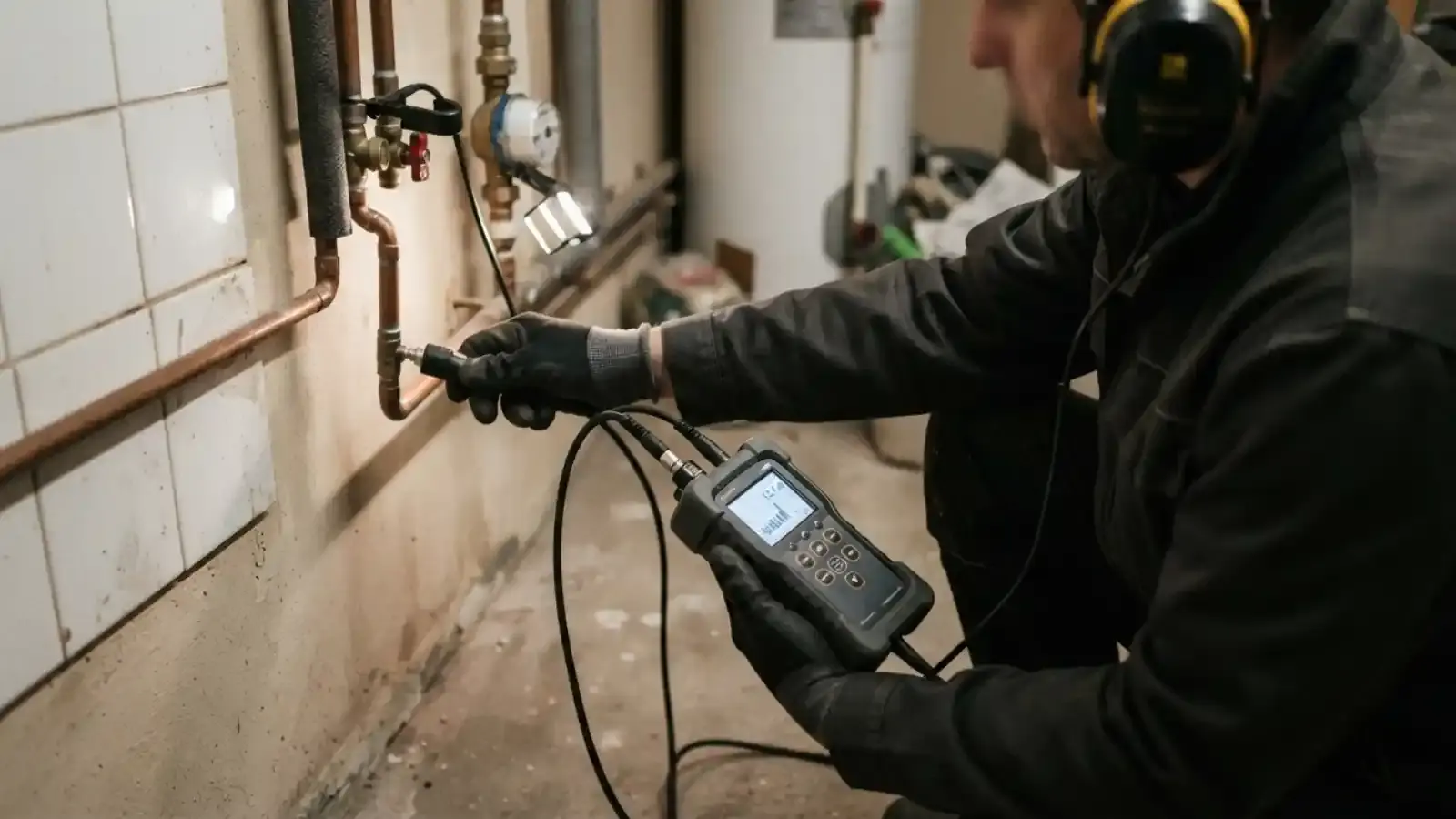
Our leak detection service uses acoustic listening, thermal imaging and pressure testing to find a hidden line without opening more drywall than necessary. If a pipe has split and water is spraying, treat it as a burst pipe and shut off the main water first.
Cleanup and claim checklist after a ceiling leak
Once the water is stopped, these steps protect the home and your claim.
- Dry the area fast Use fans and a dehumidifier, since wet drywall and insulation can grow mold quickly.
- Cut out sagging drywall Wet drywall that bulges is safer opened up than left to fall.
- Save the evidence Keep photos, receipts and any failed parts we remove.
- Tell your insurer early Policies often cover sudden water damage but usually not the failed pipe itself, so check your policy.
- Tell your association In a condo, the manager needs to know before work touches shared lines.
- Repair the source before the ceiling New drywall over an active leak will stain again.
Tell us whether the stain returns after dry weather and what runs above it. That detail often saves a long search.
Ceiling stain questions from Deerfield Beach homeowners
Yes. In humid South Florida an air conditioner produces a lot of condensation, and a clogged drain line or an overflowing pan can leak into the ceiling below.
We do not repair air conditioners, but we can check whether plumbing is involved so you know which trade to call.
Not always. A dry, old stain may be a past leak that has stopped. A stain that is wet, growing, bulging or dripping needs attention quickly.
If you are not sure, shut off the main water and run the meter test.
Look at timing. Roof leaks follow rain, while pipe leaks keep going in dry weather and often move the water meter.
A stain under a bathroom or kitchen also points toward plumbing.
Homeowner policies often cover sudden and accidental water damage, but usually not the repair of the worn pipe or a slow, ongoing leak. Check your policy and call your insurer early.
Photos, dates and a written note from the repair help your claim.
Often yes. We use listening gear, thermal imaging and a pressure test to find the spot first, and then open a small access point.
If the line runs through a finished ceiling, a small opening is common.
Yes, we dispatch from Deerfield Beach to nearby Broward County towns. Our Coconut Creek page and service areas page list where we work.
Give us your street and ZIP when you call so we can confirm.