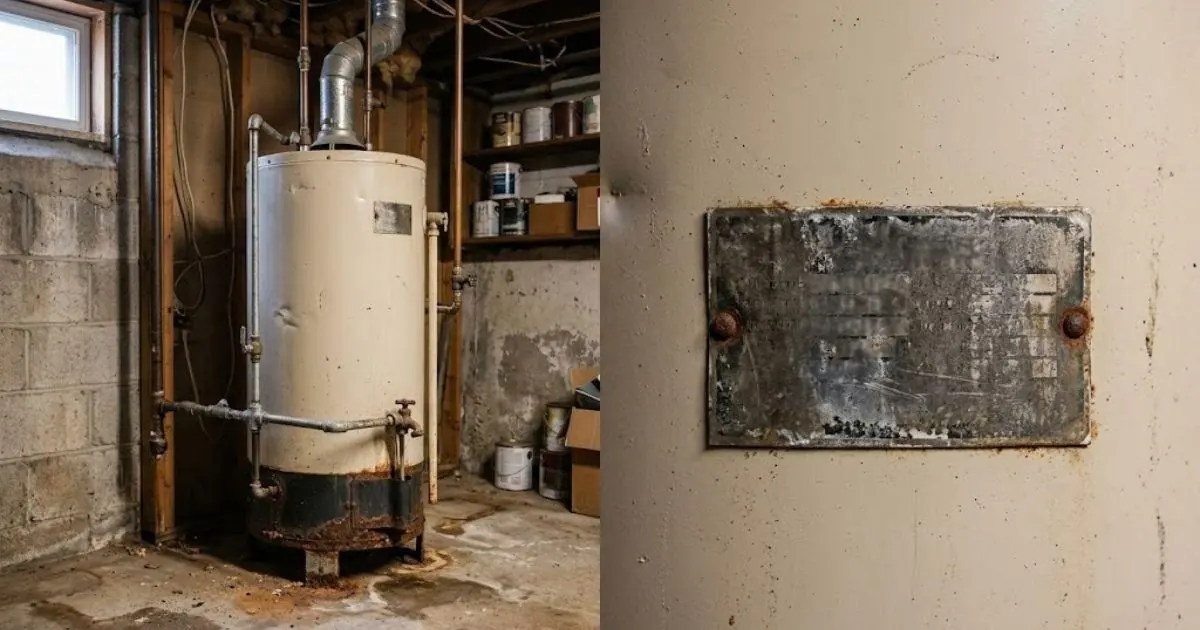
Shut it down first, then read the puddle
Before you look for the cause, stop the leak from growing. For an electric unit, switch off its breaker. For gas, turn the control to the off or pilot position, and close the cold water shut-off valve on the pipe above the tank.
Then check where the water is really coming from. Wipe the base dry, put a dry paper towel under each connection, and watch for a minute. A damp towel under a pipe fitting tells a different story than a steady drip from the bottom edge of the tank.
Do not drain the tank unless you have a plan for where the water will go, and never touch the unit if water is around electrical parts. If the area is flooded or you are unsure, leave it alone and call us. A leaking tank in a closet can soak walls and flooring quickly.
Five common reasons water collects under a tank
Each cause leads to a different repair. Here is how to tell them apart.
A leaking drain valve
The drain valve sits low on the tank and can drip when its seal wears or sediment holds it open slightly. It is a small part, and replacing it is usually a quick repair.
A failed tank
Over time the steel liner corrodes and the tank can seep from the bottom or a seam. This is not repairable, and the unit must be replaced.
A temperature and pressure relief valve
This safety valve opens when pressure or heat climbs too high. If it drips constantly or its discharge pipe runs, there is a pressure or valve problem to check.
Loose or worn fittings
The hot and cold connections at the top can drip and send water running down the tank, so it looks like a bottom leak. Tightening or replacing the fitting often fixes it.
Condensation
In humid weather, a cold tank can sweat. Gas units with high efficiency can also produce condensation that drains out, so a small amount of moisture is sometimes normal.
Real condensation dries up and does not return once the surface warms. If the puddle grows over hours, treat it as a leak.
What Deerfield Beach homeowners should know
Many homes and condos in Deerfield Beach are built on concrete slabs with few or no basements, so water heaters often sit in garages, closets or utility rooms. A leak there runs straight onto the slab or into a carpeted room, which is why a drain pan and a quick shut-off matter.
Garages get hot in summer, and humidity and salt air near the coast can speed up the corrosion on fittings and tank bottoms. If your unit is close to Main Beach or The Cove, check the fittings and the base more often for rust.
The city's water report lists chloramine as its disinfectant. Ask the city for its annual water quality report if you want to talk through what that means for your heater, and do not assume anything about mineral buildup without testing your tap.
Why a leak at the tank body usually means replacement
Inside a tank heater, an anode rod is meant to corrode first so the steel tank does not. When the rod is used up, minerals and water begin to attack the liner, and eventually the bottom or a seam lets go. By the time water shows at the base of the tank, the damage is already through the steel.
No patch will hold on a pressurized tank, and a spot treatment only delays the real failure. Repairing the tank itself is not something we recommend, because the next leak tends to arrive at a worse time.
That does not mean every leak means a new heater. A dripping valve or fitting is a repair, and we will tell you plainly which side your unit falls on. Our water heater repair visit starts by finding the source before anything is replaced.
Repair or replace: what points each way
Use this to size up your situation before you call.
Usually a repair
- Water comes from a valve, pipe fitting or discharge pipe
- The tank body is dry and the metal looks clean
- The unit is not old and has had few repairs
- The leak is a slow drip at a connection
- A failed part is a small, cheap component
Usually a replacement
- Water seeps from the base, a seam or the tank bottom
- The tank is rusted or flaking at the base
- The heater is old and has needed repeated repairs
- The floor around it is soaked or rotting
- A repair would cost a large share of a new unit
When replacement is the answer, we can often arrange it as a same-day job when available. Our water heater replacement page explains the options, including tank, tankless and hybrid heat pump models.
What to do in the first hour of a bottom leak
These steps limit damage while you wait for a plumber.
- 1
Cut the power or gas
Turn off the breaker for an electric unit or set a gas unit to off. Do this before you touch anything near the water.
- 2
Close the cold water supply
Turn the shut-off valve on the cold pipe at the top of the tank to stop new water from entering.
- 3
Contain the water
Mop up what you can, move stored items and place towels or a bucket. A wet vacuum helps if you have one and the area is safe.
- 4
Photograph the damage
Take photos of the unit, the label and the wet area before cleanup. Insurers usually ask for them.
- 5
Call a licensed plumber
Describe where the water starts. That helps us bring the right parts and decide whether to repair or replace.
Condo closets, drain pans and who pays for damage below
A drain pan under the tank catches small leaks and sends them to a drain line. It buys you time but does not stop a failed tank from flooding the room, and a clogged pan line can overflow too. If your heater sits on a platform in a closet, check that the pan is not holding old water.
Water in a condo can damage the unit below, which raises the question of who pays. The answer depends on the association rules and your policy, so read both and notify the manager quickly. Photos and a written description of the repair help every claim.
Homeowner policies often cover sudden and accidental water damage but usually not the replacement of the worn heater itself. Check your policy before you decide anything.
Water on the floor now?
Call (561) 448-8545 and tell us where the water starts. We will help you decide whether it is a repair or a replacement.
Water heater leak questions from Deerfield Beach homeowners
It can be, because water near electrical parts or a gas control is a hazard and a failing tank can release a lot of water. Shut off power or gas and the cold water supply before doing anything else.
If the floor is flooded or you smell gas, leave the area and call for help.
It is not a good idea. A small leak at the tank often grows, and water can damage flooring, walls and the unit below in a condo.
Turn it off, close the water, and have it checked.
No. A pressurized steel tank cannot be reliably sealed from the outside, and a patch hides the problem until it fails again.
A dripping valve or fitting is a different story and is often a straightforward repair.
That depends on your association rules and insurance, so check both and tell your manager right away. Lines and equipment that serve only your unit are often your responsibility, and damage to a neighbor can fall on your policy.
Keep photos and any written notes from the repair visit.
Wipe the area dry and wait. Condensation appears in small beads on a cold tank in humid weather and does not keep growing, while a real leak keeps adding water.
If in doubt, put a dry towel under the unit overnight and check it.
Yes, we dispatch from Deerfield Beach to nearby Broward County towns, including the area covered by our Coconut Creek page. Browse our service areas for the full list.
Share your street and ZIP when you call to confirm coverage.