Before you blame a leak, rule out normal use
Bills can rise for reasons that are not leaks. Houseguests, a new pool fill, extra irrigation during dry weeks or a longer billing period can all push use up. Check the dates and compare the same period from last year if you have it.
If nothing explains the jump, test for a leak. A hidden leak runs around the clock, so even a small one adds up over a month. A toilet that leaks a thin stream into the bowl can waste a great deal of water without making any noise.
Seasonal habits matter in South Florida. Summer rain can make a sprinkler schedule unnecessary, yet a timer may keep running anyway. Check that your irrigation settings match the weather before assuming the bill means a break.
The two-hour meter test
This test shows whether water is leaving your plumbing when nobody is using it.
- 1
Turn everything off
Stop the dishwasher, washer, ice maker cycle and irrigation, and make sure no one runs a tap or flushes.
- 2
Read the meter
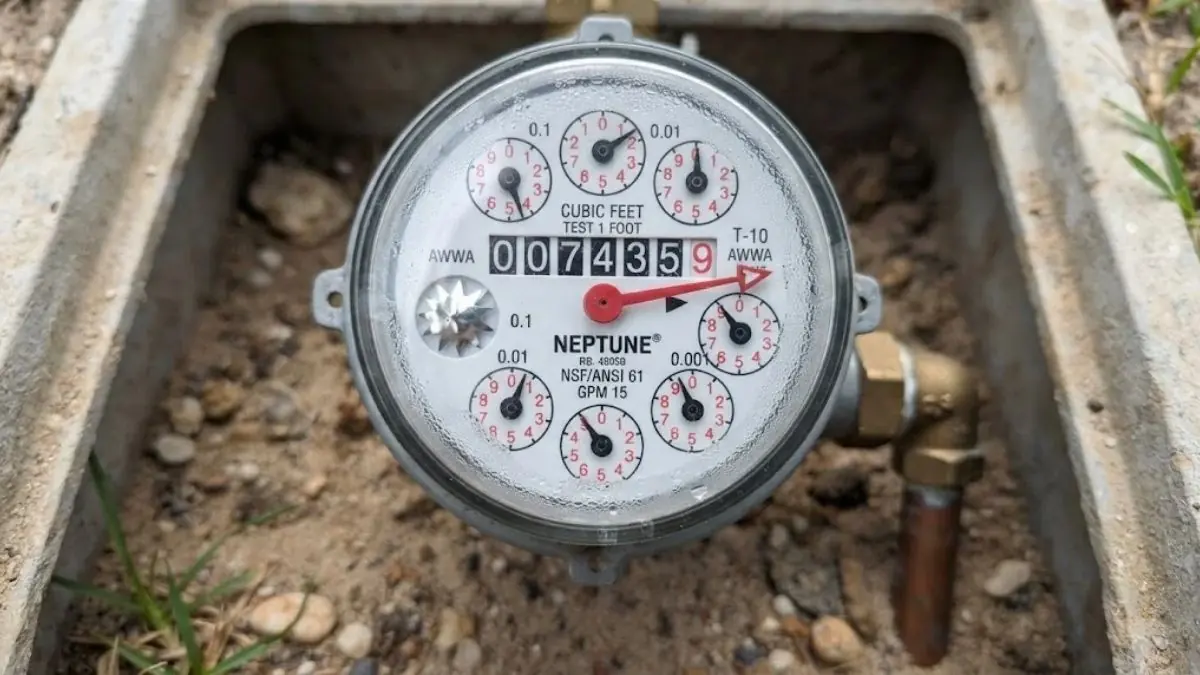
Open the meter box. Note the numbers on the dial and look at the small leak indicator, which spins or flashes if any water flows.
- 3
Wait about two hours
Keep every fixture off and avoid flushing. Do not run water anywhere in the house or yard.
- 4
Read it again
If the numbers have changed or the indicator has moved, water is leaking. If nothing changed, the leak is not constant or the cause is use.
- 5
Close the main valve and read again
If the meter stops once the house main is closed, the leak is inside your plumbing. If it keeps moving, the leak is between the meter and the valve.
Common hidden leaks and how to spot them
If the test shows movement, these are the most likely places to look.
A leaking toilet flapper
Add a few drops of food coloring to the tank and wait. If color reaches the bowl without flushing, the flapper or fill valve is leaking. Our toilet repair service fixes that.
Irrigation lines
A cracked sprinkler pipe or stuck valve can run water into the soil. Close the irrigation supply and see whether the meter slows.
The water heater relief valve
A valve that drips or runs to a discharge line can waste water quietly. Look for moisture or a wet pan below it.
Leaks inside walls or ceilings
Look for stains, musty smells, warped trim or sounds of running water in a quiet house.
A slab leak
Warm spots on a floor, a sound of running water and sudden bill growth can all point to a line under the slab.
A buried supply line
Soggy ground, pooling near the meter box or weak pressure at every tap can mean the line from the meter has failed.
What Deerfield Beach homeowners should know
The City of Deerfield Beach has a water meter upgrade program, and it publishes a service-line material inventory at dfb.city/waterline. If your bill jumps near a meter change, ask the city's utility billing office to check your readings, since a plumber can then focus on your own side of the meter.
Many local homes and condos sit on concrete slabs, so supply lines often run under the floor. A slab leak can raise the bill long before any stain shows, which is why the meter test is the first thing to do.
In a condo, the meter may serve the whole building or several units. Ask the association how your charges are split before you chase a leak in a unit that may not be the cause. We also serve homes to the west, and our Coconut Creek page covers that, while the service areas page lists other towns.
How a professional leak search narrows it down
When the cause is not obvious, a plumber narrows it down in stages. We isolate sections of the supply line, listen with acoustic gear, scan with thermal imaging and pressure test the lines. This finds the leak while opening very little of the wall, floor or yard.
That is the work our leak detection service covers, and once the spot is confirmed we repair it or explain the options. If the leak is a failed pipe that has been wetting a wall, we also tell you what damage to show your insurer.
Do not wait for a stain to appear. A leak in a pressurized line keeps adding to the bill every day, and wet materials can grow mold in humid weather. A quick search usually costs less than a long delay.
Homeowners policies often cover sudden and accidental water damage, but they usually do not pay for the repair of a worn pipe or a gradual leak. Check your policy and keep your bills, meter photos and any repair notes.
Fix it yourself or call a plumber
Some leaks are simple to stop. Others need tools and a trained eye.
Reasonable to handle yourself
- Replacing a worn toilet flapper
- Closing an irrigation valve that sticks
- Tightening a visible supply line nut
- Turning off the main to stop water
- Taking dated photos of the meter
Better to call us
- The meter moves and you cannot find why
- Water is coming from a wall or floor
- The water heater valve keeps dripping
- Wet or sunken ground near the line
- Warm spots or sounds under a slab
If you are unsure, call (561) 448-8545 and describe what the meter did. We can tell you quickly whether it sounds like a simple fix or a search.
Next steps once a leak is confirmed
These steps limit damage and protect any insurance claim.
- Shut off the water Close the main valve if you cannot stop the leak at a fixture.
- Take photos and video Capture the meter, the wet area and any damage before cleanup.
- Save your bills Keep the high bill and a few earlier ones for comparison.
- Call your insurer early Ask what documentation they want before repair starts.
- Get the cause confirmed A plumber's note on what failed and where helps with any claim.
- Ask the utility about the bill Some utilities have a process for review after a repair, so ask billing.
Water bill questions from Deerfield Beach residents
Possibly. Ask the City of Deerfield Beach utility billing office whether they can review your readings or flag unusual use. What they can tell you depends on the meter and the program, so we do not promise a specific result.
A reading history can help show when the jump started, and it gives your plumber a useful starting point.
More than most people expect, since it runs day and night without a sound. A thin stream into the bowl can add a noticeable amount to a monthly bill. The dye test in the tank takes a minute and gives a clear answer.
Likely yes. Leaks inside walls, under slabs or underground can stay out of sight. A professional search with listening gear and thermal imaging can find them without opening large areas.
Yes. A stuck valve or cracked line can run water for days. Close the irrigation supply and recheck the meter to see whether the leak stops.
Close the main valve if the leak is large or damaging a building. For a small leak, limiting use is fine for a short time. Call us on (561) 448-8545 and we will help you decide, and we offer same-day appointments when available.
No. A longer billing period, a pool fill, guests or heavy irrigation can all raise it. The meter test separates real leaks from changes in use.