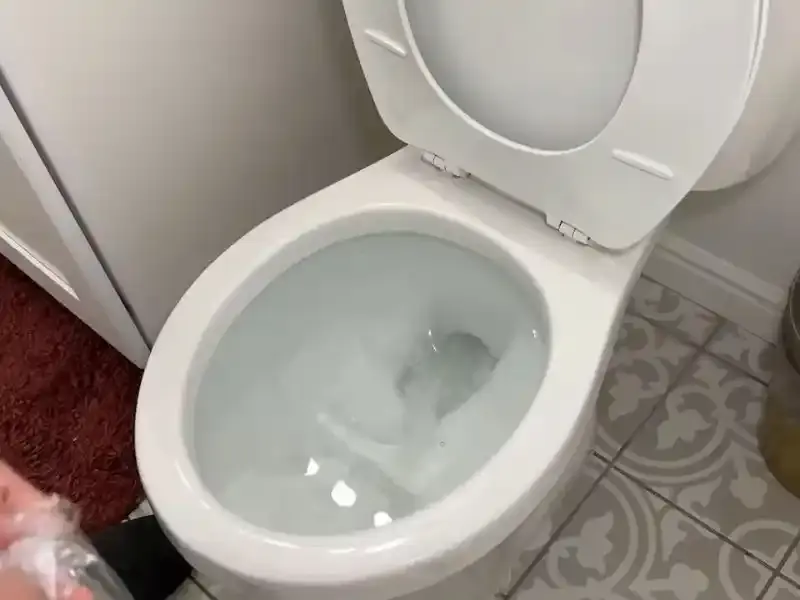
Before you plunge: stop the water and gather the right tools
First, do not flush again. If the bowl is already high, lift the tank lid and push the flapper down, or turn the supply valve behind the toilet clockwise to shut off the water. That keeps the tank from sending more water into a bowl that cannot drain.
Lay towels or old newspaper on the floor, put on rubber gloves and open a window if you can. Then look at what you have. A flange plunger, which has a soft rubber sleeve extending below the cup, seals the toilet drain far better than the flat sink plunger. A closet auger, sometimes called a toilet snake, is the next tool and is made to reach into the bend of the bowl without scratching the porcelain.
If you do not own either tool, a hardware store has both at a modest price. A closet auger is worth keeping on hand, because most households deal with a stopped toilet sooner or later.
Why toilets clog in the first place
Knowing the cause tells you which fix to try and whether the clog is likely to return.
Too much toilet paper
A big wad can swell and stop in the trap, especially in a toilet with a weak flush. Using less paper per flush, or flushing twice, often prevents it.
Wipes labeled flushable
These do not break down like paper and tend to tangle in the trap and the pipe beyond it. They are a leading cause of repeat clogs.
Small objects
Toys, cotton swabs, floss and hygiene products slip in quickly and lodge in the bend. These need an auger or sometimes a toilet removal to retrieve.
A weak flush
Mineral buildup in the rim jets or a partly closed supply valve can reduce flush power. The toilet may then leave waste behind that builds into a clog.
A line problem beyond the toilet
If other drains gurgle or back up, the cause is likely in the branch or main line. Plunging the toilet will not fix that.
A quick test helps you sort these out. Run a nearby sink or tub and watch the toilet. If water gurgles up in the bowl or the tub drains slowly at the same time, stop treating it as a toilet problem and call a plumber who can clear the line. If everything else drains normally, the clog is almost certainly in the toilet itself, and the steps below should work.
Which method fits which clog
Start with the gentlest tool and work up. This table shows how the options compare.
| Method | Best for | Watch out for |
|---|---|---|
| Flange plunger | Paper and soft waste clogs | Needs a good seal and enough water to cover the cup |
| Hot tap water and dish soap | Slow, greasy or soapy buildup | Boiling water can crack porcelain, so use hot tap water only |
| Closet auger | Deeper clogs and small objects | Crank gently and keep the sleeve against the bowl |
| Wet and dry shop vacuum | Items stuck in the trap | Use only if you know the model is rated for water |
| Chemical drain cleaner | Nothing, we advise against it | Can damage fixtures, pipes and harm whoever works next |
| Professional drain machine | Clogs that return or involve many fixtures | A sign the problem may be in the line |
If a method has not worked after two honest tries, stop and call a plumber instead of escalating.
The safe sequence from plunger to auger
Follow these steps in order. Most clogs give way before the end.
- 1
Set up the plunger
Make sure there is enough water in the bowl to cover the rubber cup. If the bowl is low, add water from a bucket. Do not add water if the bowl is already close to the rim.
- 2
Seal and push gently
Place the flange inside the drain opening, press down slowly to push out the air and then pull up with force. Repeat about ten to fifteen times without breaking the seal.
- 3
Add hot tap water and soap
Pour in a squirt of dish soap and a bucket of hot water from the tap, not boiling. Wait about twenty minutes and then plunge again.
- 4
Use the closet auger
Feed the tip into the drain, turn the handle clockwise to catch the clog and pull it back out. Keep the vinyl sleeve against the porcelain to protect it.
- 5
Test the flush
Once the water drains, flush once and watch the level. If the bowl rises again, stop and call us.
Condos and shared stacks in Deerfield Beach
Communities such as Century Village, Hillsboro Cove and Crystal Lake have many condo units that share vertical drain stacks. In a shared stack, a chemical cleaner you pour into your toilet does not stay in your unit's pipe. It can pass into lines that serve neighbors, which is one more reason to avoid it. Ask your association what rules apply to cleaners and to plumbing work.
Condo buildings also tend to have a single plumbing contact for the association, so a clog that affects neighbors should go through them. Many local homes and condos are built on concrete slabs, so toilet drains run through the slab or the walls and are not easy to reach. That makes careful plunging and auger use even more worthwhile before anyone opens a floor.
We serve nearby towns as well, including the area on our Coconut Creek page, and you can see where we work on our service areas page.
What never to do to a clogged toilet
Do not pour chemical drain cleaners into a toilet. They generate heat and can crack the bowl or soften a wax ring, and if they do not work, the pipe is left full of caustic liquid. A plumber who then works on it risks splashes and burns, which is a real safety issue for whoever comes next.
Do not keep flushing in the hope that it will clear itself. Each flush adds water to a bowl that cannot drain and can overflow onto the floor. Do not force a wire coat hanger down the drain, either, since it scratches the porcelain and can push the clog further in.
If the toilet has overflowed, turn off the supply valve, remove standing water with towels and ventilate the room. Wear gloves and wash up afterward. Our toilet repair team can also check the flapper, fill valve and wax ring when a toilet keeps misbehaving.
Still stuck after two tries?
Call (561) 448-8545 and tell us what you have already done. We will help you decide whether it needs a plumber.
Clogged toilet questions from Deerfield Beach homeowners
No. Boiling water can crack the porcelain and soften or damage the wax seal. Use hot water from the tap, which is hot enough to help loosen buildup without risking the bowl.
If two careful rounds of plunging and the auger have not worked, call. Also call right away if other fixtures are backing up, if sewage is coming up in a tub or floor drain, or if the toilet keeps clogging.
A repeating clog points to something the first fix did not remove, a weak flush or a blockage farther down the line. Our drain cleaning service can run a machine or camera through the line to find out.
Yes. If several toilets, tubs or floor drains gurgle or back up together, the main line is likely partly blocked. In that case plunging will not help and a plumber needs to clear the main line.
We advise against it. Wipes do not break down the way toilet paper does and can gather in the trap and the line. Put them in the trash instead.
We recommend against it. In a condo with shared stacks, the chemical can travel into lines that serve other units and may harm pipes and whoever services them next. Try a plunger or closet auger, and call the association or us if the clog stays put.