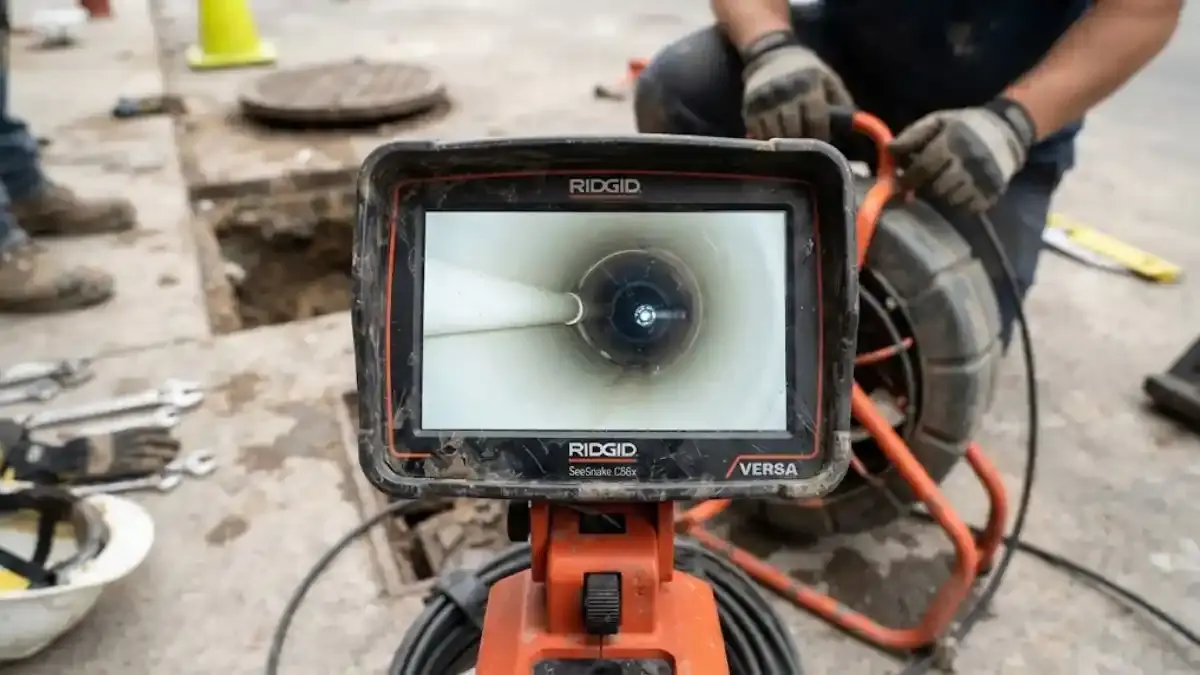
Looking inside the line before you buy
A home inspection checks what can be seen above ground, but a sewer lateral runs out of sight, often under a slab or a yard. A camera inspection lets you see that pipe before you commit. For a buyer, the video shows whether roots, cracks, bellies or offsets will become your problem on closing day.
Condos work a little differently. The lateral that serves several units may belong to the association, so ask the manager for records and who maintains the shared line. A camera can still inspect the pipe that serves your unit, and the findings give you something concrete to raise in a purchase conversation.
Many local buyers find that the seller's line has never been looked at. If that is your situation, ask whether the cleanout is accessible, and plan the visit before the inspection period ends. A line that looks fine on a quiet day can hide a belly or a root mass, which is exactly what the camera is for. Bring any seller disclosures about past backups so we know where to look first.
Why a camera beats guessing
Cabling a line tells you if water moves. A camera tells you why.
Cleaning without a camera
- Clears the blockage you can feel
- Cannot tell a clog from a cracked pipe
- May miss a belly or an offset
- Problem can return in weeks
- Repair decisions are guesswork
Cleaning with a camera
- Shows the exact cause of the blockage
- Identifies breaks, roots and sags on video
- Records the depth and location of each defect
- Supports a repair or a decision to wait
- Gives you a record for insurers or buyers
Many repeat clogs trace back to damage a camera would have shown on the first visit.
After a backup or a repair
Once a line has been cleared, a camera tells you if the cause is gone or just pushed along. If we have just cleaned a main line, running a camera through it confirms the pipe is clear and shows whether roots or a crack are waiting to cause the next clog.
After a repair, the camera is the proof that the work succeeded. It shows the new pipe or liner, the joints and the connection to the existing line. That record is useful for your insurer and for any future buyer.
If the video shows a defect, our sewer line repair page explains what options you will be offered and how we weigh them. If the line only needs scouring, hydro jetting may be the answer.
The video and report in detail
We watch the monitor with you where possible and explain what appears on the screen.
- Pipe material and condition Clay, cast iron and plastic each look different, and so does the damage they pick up.
- Cracks, breaks and offsets We note where joints have separated or the wall has fractured and how far along the run it sits.
- Roots Fine hairs or heavy masses at a joint show where roots are entering.
- Bellies and standing water A low spot holds water and waste, so the line clogs even without a crack.
- Scale and grease buildup A narrowed bore tells us whether jetting would help.
- Distance and depth Locating tools give us the length from the cleanout and the depth at each defect.
We describe what we saw in plain terms. We do not label a pipe as failed unless the video supports it.
Camera inspection by situation
Here is how the work differs depending on why you called.
| Situation | What we look for | What you get |
|---|---|---|
| Buying a house or condo | Defects, roots, bellies, pipe material | Video and notes to use in negotiation |
| Repeat backups | The cause of the repeated blockage | A clear answer on cleaning or repair |
| Before a remodel or addition | Line position and condition | A map of where the pipe runs |
| After a repair | Whether the new section is sound | Proof the work holds |
| Cleanout cannot be found | Line path from another access point | Locating tools mark the pipe from above |
| Slow leak or sewer smell | Cracks, dry traps, venting | A narrowed list of causes |
Locating tools track the camera head from the surface, so we can mark the line or a break on your lawn or floor.
How the inspection runs on the day
The visit is short and nonintrusive, and the equipment is easy to set up.
- 1
Find the access point
We use a cleanout when there is one. If not, we look at a toilet flange, a vent or another access, and locating tools help us find the right spot.
- 2
Feed the camera
A flexible cable with a camera head and light travels along the line while we watch the monitor and track the distance.
- 3
Mark what we see
At any defect, a locating transmitter in the camera head lets us mark the spot above ground and note its depth.
- 4
Review the findings
We go over the video with you, explain what each defect means, and say whether the line needs cleaning, repair or nothing.
- 5
Plan next steps
If work is needed, we give a clear price before work starts. If the pipe is sound, we say so and leave it alone.
What affects the cost of a sewer camera inspection
An inspection is a short visit with a clear scope. We give a clear price before work starts, and these factors shape it.
Insurance usually does not pay for an inspection that is requested out of caution. If a claim for water or backup damage is open, the video can support it, so ask your adjuster whether they want it.
Buyers often add the camera cost to their due diligence, so ask about it early.
Want your real number? Call us and describe the job.
(561) 448-8545Sewer camera questions from Deerfield Beach buyers and owners
Often yes. We look for another way into the pipe, such as a toilet flange or a vent, and use locating tools to find the line from above. On slab homes, an unmarked cleanout can be buried, and we can tell you where it likely sits.
A sewer camera looks inside drain pipe, not supply pipe. For a suspected water supply leak behind walls or under the slab, our leak detection service uses listening gear, thermal imaging and pressure testing.
Possibly. A trap that loses its seal can be a venting problem, a crack, or a siphon from a blockage downstream. A camera can narrow down which one, and we can check the vent and the trap on the same visit.
Not through standing water or heavy debris. If the line is full, we clear it first, then inspect. Our drain cleaning team can help if the stoppage is local.
No. The camera runs through an existing opening, so the visit is nonintrusive. Digging only comes up if we find a defect that needs repair.
Yes, ask when you book and we will plan to record it. A copy helps with negotiations, insurance and any future sale.
Yes. We serve nearby Broward County towns, and our Coconut Creek page explains how we work there. Our service areas page lists others, and urgent backups can reach our 24/7 line.