Water or heat is coming up through the floor
A pressurized line under concrete can leak for a long time, but it can also worsen quickly. Floors that feel warm, tile that lifts, or carpet that squishes underfoot mean water is already moving into the home.
Close the main shut-off
Turn off the main valve where the water line enters the building. In many local homes it is near the water heater, in the garage or on an exterior wall. Closing it stops the flow into the slab line right away.
Turn off the water heater supply
If hot water is escaping under the floor, shut the cold inlet valve on top of the tank and switch off the heater's power or gas. A heater that keeps heating while water drains out can be damaged.
Keep feet and power away from wet areas
Do not stand in standing water near outlets, appliances or the panel. If a breaker needs to be shut off and you cannot reach it dry, tell us when you call and we will plan around it.
Document before you clean
Photograph the floor, the stained baseboards and your water meter. Insurers usually ask for evidence of when and how the problem started.
In a condo, tell your property manager or association as soon as you can. A slab line can serve neighboring units, and building rules often decide who may open the floor.
Why slab leaks happen and why they are so common here
Many Deerfield Beach homes and condos are built on concrete slabs with few or no basements, so supply lines frequently run through or under the floor. Over time, those pipes face abrasion against the concrete, shifting soil, corrosion from the outside and constant pressure from the inside.
Hot water lines tend to fail first, because heat expands and contracts the pipe every time the heater cycles. Copper can also develop pinholes from chemical reaction with the surrounding soil or concrete. Ask the city for its annual water quality report if you want to know what is in your water, and test your tap if you suspect it plays a role.
Homes closer to the coast, around Main Beach and The Cove, also deal with salt air and ground moisture that speed up corrosion on fittings. None of this means a slab leak is inevitable, only that the floor is a hard place to spot trouble early.
Signs the leak is under the slab
Slab leaks hide, but they usually leave clues. Several of these together make a strong case.
Warm or hot spots on the floor
A patch of tile or concrete that feels warm when nothing underneath should produce heat often marks a leaking hot line.
The sound of running water
A faint hiss or trickle at night, with every tap off, suggests a pressurized line leaking under the floor.
Wet carpet, lifting tile or buckled boards
Moisture rising from below pushes up flooring, loosens grout and leaves a damp smell.
A bill or meter that does not add up
Use the meter test. With everything off, a moving dial points to a leak. Our leak detection team can confirm where.
New floor or wall cracks
A leak that saturates soil can shift the ground slightly and open hairline cracks, though cracks alone do not prove a leak.
Low hot water pressure
If showers lose force and the heater runs more than usual, a hidden loss on the hot side may be the reason.
Repair routes and when each one fits
There is more than one way to deal with a slab leak. The right one depends on how many leaks there are, where the pipe runs and what your floors are made of.
| Option | How it works | Best when |
|---|---|---|
| Spot repair through the slab | Open a small section of floor, cut out the bad pipe and replace it | One leak on an otherwise sound line |
| Reroute overhead | Abandon the slab line and run new pipe through the walls or attic | The line is failing or the floor is costly to open |
| Full repipe | Replace all supply lines with new pipe | Several leaks or widespread corrosion |
| Epoxy or lining systems | Coat the inside of a line to seal small flaws | Limited cases where the pipe is intact and accessible |
| Fixture or valve repair | Replace a failing valve or connector near the slab | The leak is at a visible connection |
Not every option suits every building, and a good plumber explains the trade-offs before work starts.
How we find and fix a leak under concrete
The goal is to open as little floor as possible. This is the order we usually follow.
- 1
Confirm the leak is real
We check the meter, run a pressure test and rule out fixtures that could mimic a slab leak.
- 2
Pinpoint the location
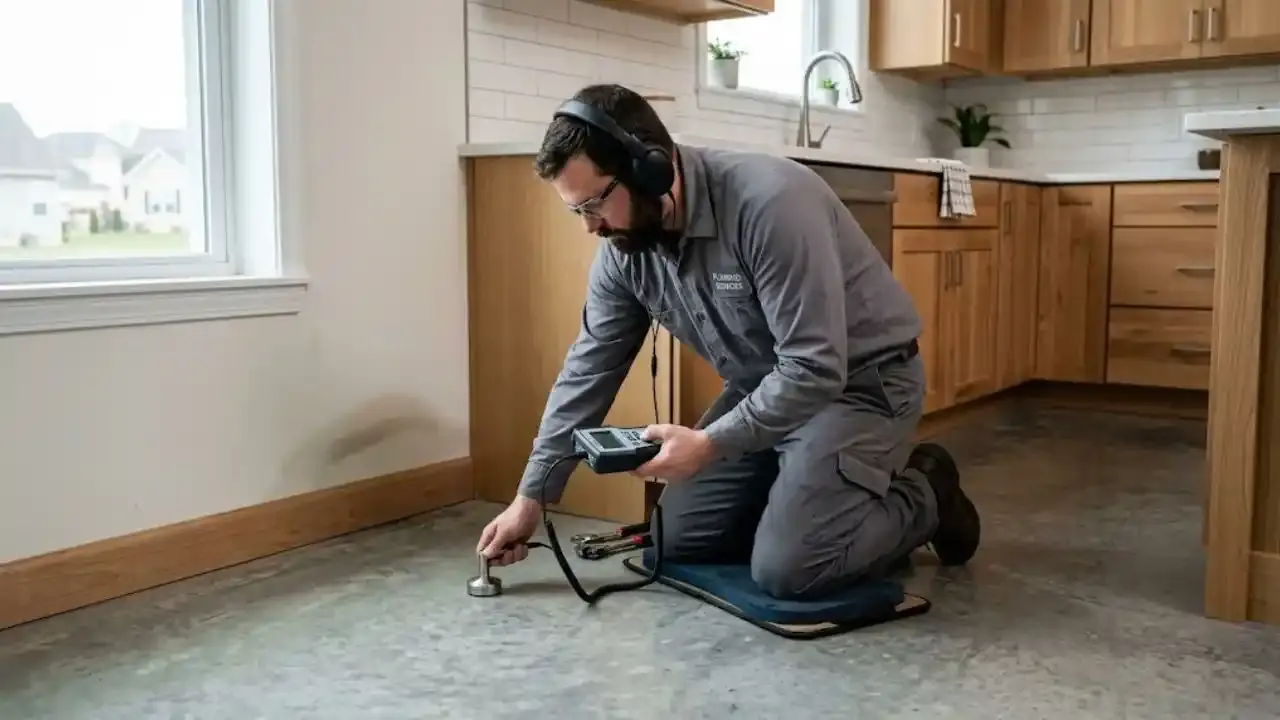
Acoustic listening along the pipe route, thermal imaging for warm spots and pressure isolation of each branch let us mark the leak on the floor.
- 3
Choose the repair route
We walk you through the spot repair, reroute and repipe options, including what each means for your flooring and budget.
- 4
Open, repair and test
We cut a small access, replace the damaged section and pressure test the line before closing anything.
- 5
Close up and hand off
We backfill and patch the concrete opening, explain what to expect, and note what a flooring or restoration contractor will need to do next.
Honest trade-offs between spot repair, rerouting and repiping
A spot repair is the least invasive choice, and it is right when one clean leak sits on a line in good shape. The risk is that a pipe that failed once may fail again nearby, especially if it is the same age and material along its length.
Rerouting through the walls or ceiling avoids breaking concrete and gives you access for any future repair. It does mean cutting and patching drywall, and it only makes sense if the new route is clear. Full repiping is the bigger project, but it removes the buried line from the equation. It is worth discussing when you have had more than one leak.
If water burst through suddenly instead of seeping, our burst pipe repair service covers the emergency side. We would rather tell you a spot repair is enough than sell a bigger job you do not need.
What shapes the cost of slab leak repair
Slab jobs vary widely, so we cannot name a number without seeing the situation. We give a clear price before work starts, and these factors drive it.
Homeowners policies often cover the water damage that results from a sudden slab leak, and some cover the cost of tearing out to reach it. They usually do not pay to replace the worn pipe itself, and gradual leaks are often excluded. Check your policy and call your insurer before repairs begin.
Save your photos and bills, and ask us for a written description of the leak location and the work done. Flooring replacement and drying are generally separate from the plumbing repair.
Want your real number? Call us and describe the job.
(561) 448-8545Slab leak questions from Deerfield Beach homeowners
Yes. Our emergency line is open 24/7, including nights, weekends and holidays, and we offer same-day appointments when available. We do not promise an exact arrival time, because it depends on where our crews are and how many calls are active.
Call (561) 448-8545 and we will tell you how to shut off the water and protect the floor.
A warm spot on the floor, a heater that runs often and weak hot water pressure point to a hot line. A cold leak often shows as a damp patch with no heat and a meter that moves with everything off.
We confirm which line is leaking with pressure isolation, which is faster than guessing. Our leak detection page explains the equipment.
It can disturb them, since tile, wood and carpet near the leak may have to be lifted. We keep the opening as small as the repair allows, and rerouting overhead can avoid the floor altogether.
We discuss the floor impact before we begin, and we note what a flooring contractor will need to do afterward.
Policies differ, but they often cover resulting water damage and sometimes the access work, while not covering the worn pipe itself. Read your policy and notify your insurer early.
Photos, your water bills and our written description of the leak all help the claim.
Often yes, but association rules usually apply, especially for noise, floor access and shared lines. Ask your property manager what approvals are needed before any work starts.
If the line also serves other units, the association may need to be involved. Tell us what they say so we can plan around it.
Not always. A single leak on a healthy line can often be repaired locally. If you have had repeated leaks, pinholes or widespread corrosion, replacing the pipe often makes more sense.
We will tell you which case we think you are in. Our repiping page covers the materials and process.
Yes, we dispatch from Deerfield Beach to nearby Broward County towns. Our Coconut Creek page explains how service works there.
Give us your street and ZIP when you call so we can confirm coverage.