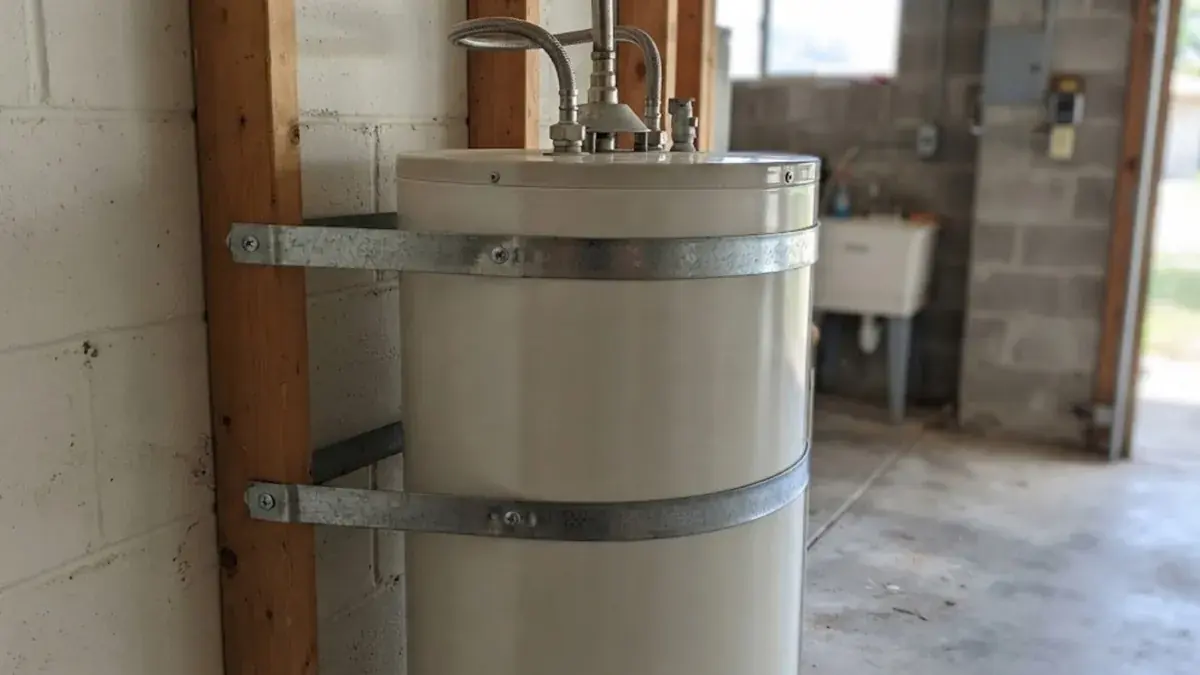
What each sensor does inside the heater
Heaters do not guess at water temperature or flame. They rely on small parts that report back to a control. In a gas tank unit, a thermocouple or flame sensor proves that the pilot or burner is lit. If the signal drops, the gas valve closes so raw gas does not keep flowing.
A thermostat on the tank reads water temperature and tells the burner or electric elements to start and stop. Electric tanks use upper and lower thermostats, each wired to its own element. Many units also have a high-limit switch that cuts power or gas if the water gets too hot.
Tankless units add inlet and outlet temperature sensors, a flow sensor and a flame rod. They work together so the unit fires only when water is moving and stops when the target temperature is reached. A bad sensor in any of these can trigger an error code or shut the unit down.
Gas tank sensors versus electric tank sensors
The two tank types fail in different ways, which helps you describe the symptom when you call.
Gas tank water heater
- Thermocouple or flame sensor proves the flame is lit
- Pilot lights, then goes out when you release the knob
- Burner may start and shut off after a few seconds
- Gas control valve houses the thermostat
- Gas work should stay with a licensed pro
Electric tank water heater
- Upper and lower thermostats control each element
- High-limit switch trips when the water overheats
- Symptoms are no hot water, lukewarm water or a tripped reset
- Heating elements can fail and mimic a bad thermostat
- Power must be off at the breaker before any panel is opened
Both types carry a temperature and pressure relief valve, which is a safety device and not a sensor. Never cap or plug it, and see our water heater repair page if it drips.
Tankless sensors and error codes
Tankless heaters monitor flow and temperature constantly. If the flow sensor reads wrong, the unit may not ignite even though water is running. A bad outlet sensor can make the temperature swing between hot and cold, which is often mistaken for a clogged unit.
Mineral buildup can also cause false sensor readings, since scale coats the parts that measure heat. That is why some error codes clear after a flush and others do not. A code is a clue, not a diagnosis, so we check venting, gas supply, water flow and power before replacing anything.
If your unit is a tankless model, our tankless water heater page covers installation, flushing and service. Do not keep resetting a unit that repeats the same code. Repeated restarts can hide a real problem.
Signs a sensor may be failing
These symptoms often point to a sensor or control problem, though a few can have other causes.
- The pilot will not stay lit A weak or dirty thermocouple or flame sensor cannot prove the flame, so the gas valve closes.
- Water is lukewarm or never gets hot A drifting thermostat or failed element can keep the tank below the set temperature.
- Water runs scalding A thermostat stuck on can overheat the tank, and that is a safety issue to handle quickly.
- The reset button keeps tripping A tripped high-limit switch often means a failed thermostat or a fault the switch is protecting you from.
- An error code returns after resetting A code that comes back right away suggests a failed sensor, a wiring issue or a condition the unit does not like.
- The burner lights, then shuts off That pattern fits a flame sensor that is dirty or failing, or a vent problem that needs a technician.
Warm-water complaints can also come from a bad dip tube, sediment or a mixing valve. A short test before replacing parts saves you from buying the wrong one.
Storms, outages and garage heat in Deerfield Beach
Hurricane season runs June through November, and storms can knock out power or flood utility spaces. If your water heater sits in a garage or low closet and water reached it, have the controls checked before restoring power or gas. Wet electronics and gas valves can fail in ways that are not obvious.
Summer heat matters too. Many local water heaters sit in garages that get very hot in summer, and heat can wear on wiring, control boards and sensor connections over time. Keeping the area clear and ventilated helps, and we check the area during any visit.
Many homes and condos here are on concrete slabs, so heaters are often in closets and utility rooms. Condo closets can hold a unit close to walls and shared spaces, so tell your association if a heater swap or repair needs building approval. We serve nearby towns as well, including the area on our Coconut Creek page, and you can see where else we work on our service areas page.
DIY check or call a plumber
Some checks are reasonable for a careful homeowner. Anything that opens a gas line or live electrical parts is not.
| Task | Reasonable DIY? | Why |
|---|---|---|
| Check the thermostat setting | Yes | Dials and displays can be bumped or reset |
| Press the reset button once | Once only | A repeat trip means a fault, not a nuisance |
| Confirm breaker or gas supply | Yes | Visual checks with no panel opened |
| Replace a thermocouple or flame sensor | No, call us | Involves the gas valve and leak testing |
| Replace an electric thermostat or element | No, call us | Live power and the risk of dry-firing an element |
| Clear a tankless error code | Not repeatedly | Repeated restarts can mask a safety shutdown |
If you ever smell gas, leave the building and call the gas utility or 911 before you call anyone else.
Repair the sensor or replace the heater
A new sensor is usually a smaller repair than a new heater. If the tank is leaking, rusting at the base or has failed more than once in a short time, putting money into another part may not make sense. When the tank body itself is the problem, no sensor will fix it.
We look at the age and condition of the heater, the history of repairs and whether the parts are still available. If a sensor repair is a sound choice, we say so and do it. If the unit is near the end of its life, we discuss our water heater installation options and let you decide.
A clear price before work starts matters here. Ask what the part is, what labor includes and whether the work will be tested before we leave.
Water heater sensor questions from Deerfield Beach homeowners
If the pilot lights and then goes out when you release the knob, the thermocouple or flame sensor is the usual suspect. If the sensor is new and the problem remains, the gas control valve may be failing. We test before we replace anything.
Some people can, but the job touches gas or live power, and mistakes can create leaks, shock or fire risk. We recommend a licensed plumber for any sensor tied to the gas valve or electrical elements. Simple checks like the thermostat setting are fine.
The high-limit switch trips when water gets too hot or a fault appears. Press it once to see if it resets, but if it trips again, stop using the heater and call us. A repeated trip is a warning, not a nuisance.
It depends on the tank's condition. If it is leaking or showing rust, a new part will not solve the real problem. If the tank is sound, a sensor repair can add useful life. We tell you which case you are in.
It can. A stuck thermostat may overheat the tank, and a failed flame sensor can interfere with the safety shutoff. If water is scalding or you smell gas, shut off the heater and call us or the gas utility right away.
A brief outage usually does not harm a sensor, but a power surge or flooding can damage controls and wiring. After a storm, especially if water reached the heater, have it checked before turning power or gas back on. Gas units with a pilot may need to be relit by a professional.